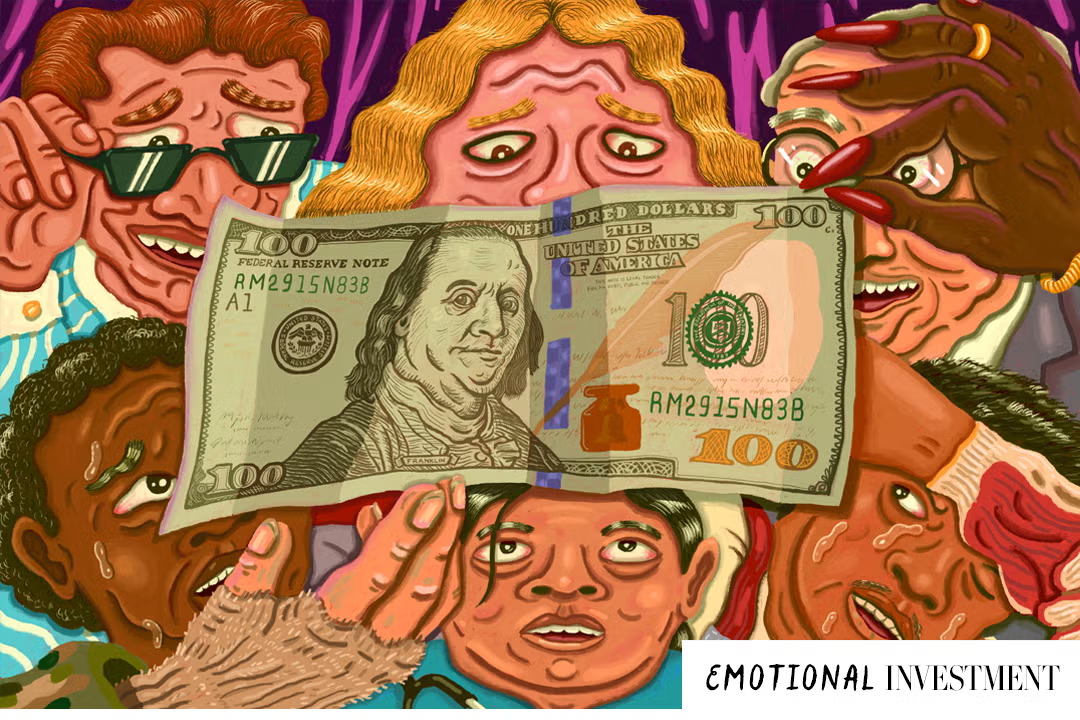
If personal finance were just about math, we'd all be millionaires. We all know the formula: Spend less than you earn, and invest the rest. Yet, human beings are hardwired to prioritize immediate gratification over long-term stability. Our brains were evolved for survival on the savannah, not for navigating complex stock market charts.
The Survival Instinct in Markets
Financial therapists call these foundational beliefs 'Money Scripts.' These are the unconscious stories we tell ourselves about wealth. Some grow up with a 'Scarcity Mindset,' fearing that money is a limited resource that could vanish at any moment. Others view money as a marker of status, leading to 'Lifestyle Creep' as their income grows.
Fear is perhaps the most powerful emotion in investing. When the market dips, our biological 'fight or flight' response kicks in. We want to 'flight'—selling our assets to stop the pain, even if it logically makes no sense. The most successful investors aren't necessarily the ones with the highest IQs; they're the ones with the highest emotional control.
The 'Keeping Up' Trap
Status anxiety is one of the biggest drains on personal wealth. We often spend money we haven't earned to buy things we don't need to impress people we don't like. In the age of social media, this 'lifestyle creep' is amplified, making us feel behind even when we are doing well. Panic is contagious, but so is discipline.
Re-wiring Your Financial Brain
The key to financial peace isn't a better spreadsheet; it's better self-awareness. By identifying your emotional triggers, you can build systems—like automated investing and logical checklists—that protect you from your own impulses.
- The 48-Hour Rule: Wait two days before any non-essential purchase over ₹5,000.
- Automated Investing: Take the decision-making out of the process by automating your contributions.
- Define Your 'Enough': Understand that wealth is not about having the most; it's about having what you need to be free.
True wealth is the ability to ignore the noise and focus on your own plan. At the end of the day, money is just a tool. Use it to build a life, not just a spreadsheet.